
- What do fundamental analysis traders look at?
- What do fundamental traders need to know?
- How Fundamental Analysis Works
- Fundamental Factors to Consider
- The Pros and Cons of Fundamental Analysis
- Let’s recap
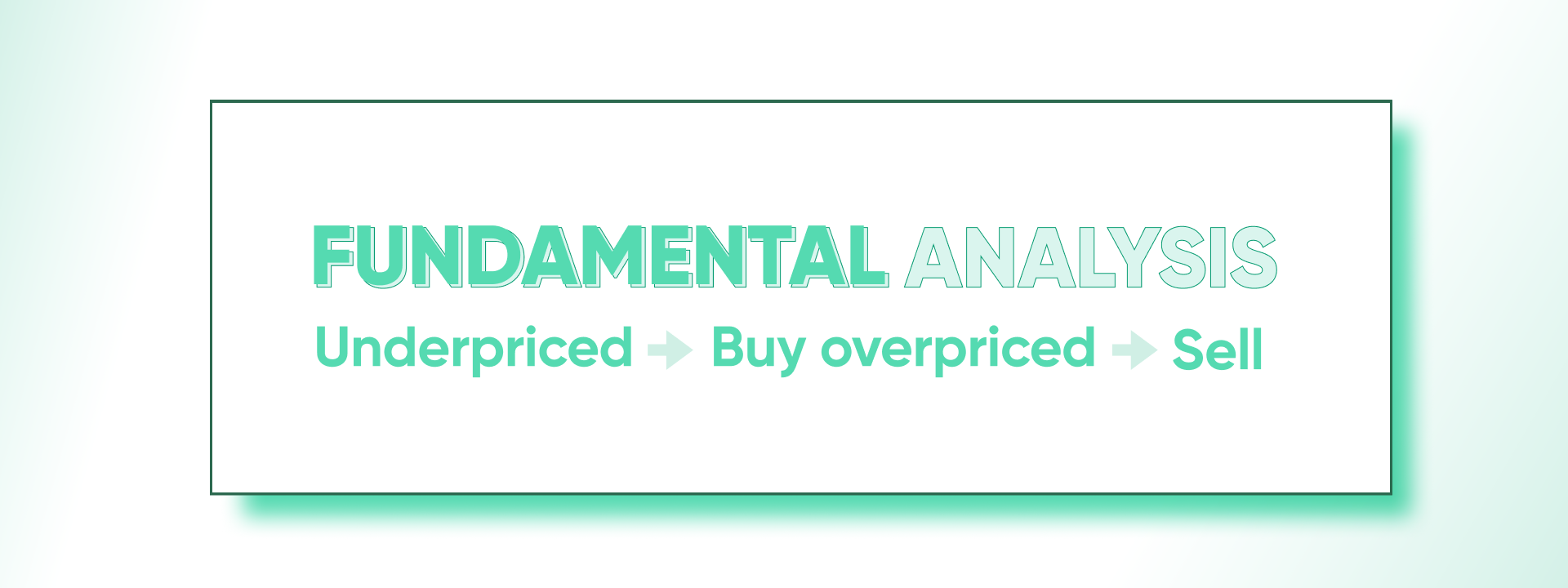
Fundamental analysis is based on the idea that all assets have a fair market value and tend to correct back to that value. When looking at currencies, movements are largely based on supply, demand, and, to a lesser degree, market sentiment. Fundamental analysis traders try to identify if assets or instruments are overpriced or underpriced, placing their trades accordingly.
If the instrument is overpriced then the trader will go short, or sell the instrument, expecting the price to drop back to the actual value. Conversely, if the instrument is underpriced, the trader will place a buy trade expecting the price to climb back to the asset’s value.
To evaluate an asset’s fair market value, fundamental analysis traders look at publicly available information, including, but not limited to, financial statements, reports, and news. Beyond that, understanding how each type of data affects an economy and the underlying currency or assets is critical.
What do fundamental analysis traders look at?
Fundamental analysis has a much wider scope than technical analysis, which focuses primarily on data, price history, and trends. It tries to determine countries’ economic outlook by looking at macroeconomic data and news relating to the instrument they are interested in. Some of the reports they use include:
- Financial reports – released by governments or companies
- Macroeconomic reports – interest rate statements, unemployment reports, monetary policy announcements
- Other data – speeches from central bank heads, speeches from heads of state
What do fundamental traders need to know?
One of the first drawbacks of fundamental analysis is that it requires extensive knowledge of geopolitics and macroeconomics, as well as the relationships between currencies and economies. Another drawback is the amount of time and effort involved in gathering said information. As stated earlier, although the information is public, you’ll need to find reliable and up-to-date sources.

Fundamental analysis, unlike technical analysis, may not be optimal for all types of traders and strategies. This is because it is intended to predict larger price movements or more significant reversals. Swing traders, scalpers, or day traders looking for small price movements may not fully benefit from fundamental analysis.
To keep you in the loop, both our app and WebTrader include an integrated research portal, allowing you to stay up to date on the latest news and analysis.
How Fundamental Analysis Works
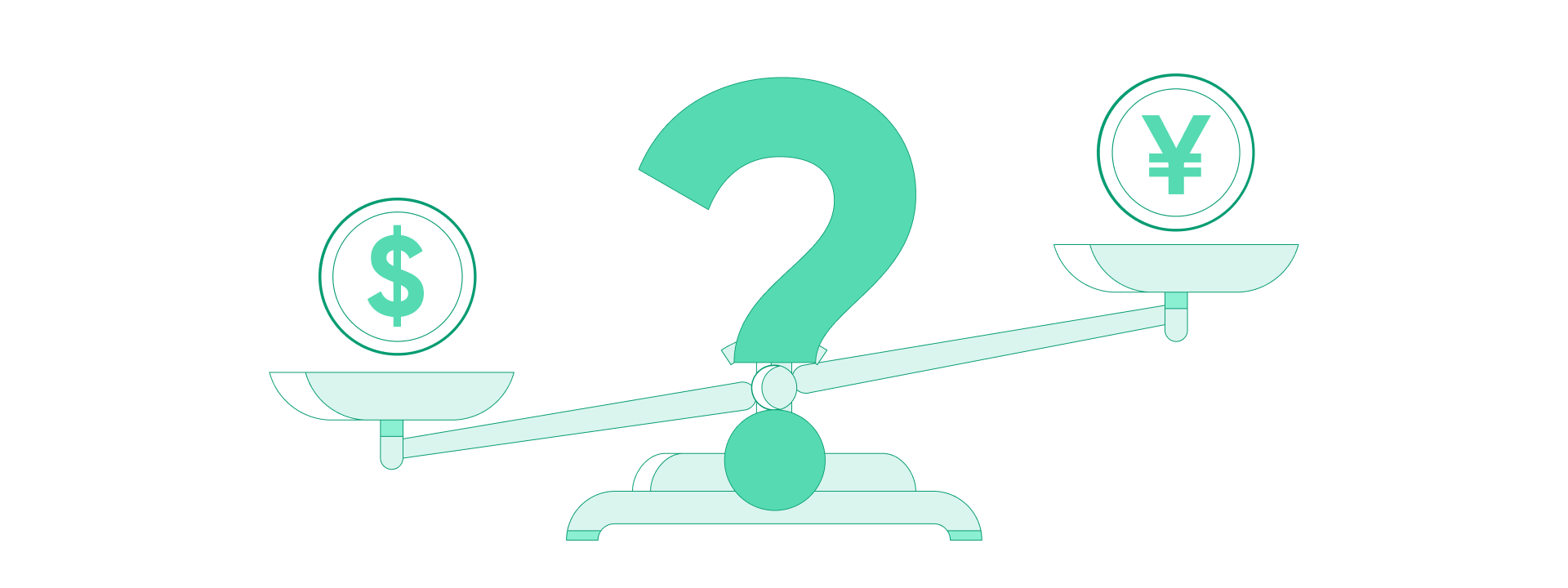
Let’s say you’re interested in USDJPY. First, you would look at the economic conditions in both the U.S. and Japan. Then, you’d look at any upcoming macroeconomic events, geopolitical or policy changes affecting either currencies, and finally, if the currency pair is overbought or oversold. All this information should give you a general idea of which direction USDJPY may move in the near future.
Fundamental Factors to Consider
So, that’s how fundamental analysis works, but where do you find the data?
Traders use various online financial news sources to get the data they need. Our webtrader and app both feature an economic calendar and news feed you can use. When doing your analysis, ensure your sources are credible, reliable, and up to date.
Here are the factors fundamental analysts look at.
Economic Health
When a country’s economy is experiencing growth, local companies will benefit, and interest for its currency may increase as well. When a country’s economy is struggling, businesses encounter more challenges – inflation, increased energy costs, and a devalued currency, all increase costs.
Using various data points including unemployment, consumer price index, gross domestic product, business confidence index, central bank statements, and other public data, you can get a decent picture of a country’s economic health.

Macroeconomic Events
Macroeconomics are simply economic policies or reports released by governments or other official reporting bodies.
Some of these reports are reoccurring, like the U.S. Non-farm payroll, which is released every first Friday of the month. Others might be impromptu due to economic conditions, so it’s important to stay on top of the news.
Here’s how policy and reports can affect a currency like Australia’s AUD which is closely tied to commodity prices. Reports like the weekly natural gas storage may affect AUD pairs as Australia is one of the world’s top natural gas producers.
We also saw policy affecting currencies, when the Turkish lira rapidly devalued because of the administration’s reluctance to increase interest rates to combat inflation.
Geopolitical Events
Continuing the AUD example above, supply chain issues in 2020 caused various commodity prices to increase, which was beneficial for AUD but hurt other currencies.
The war in Ukraine caused the EUR to drop, because of increased energy prices and fear that the conflict might boil over into neighbouring EU countries.
Additionally, during global volatility, traders may prefer “lower risk” currencies like the Swiss franc (CHF) or Japanese yen (JPY).
Overbought or oversold conditions
Some things may increase the markets’ interest in specific currencies.
As mentioned above, during times of global instability “safer” currencies like CHF or JPY may see more demand. This can cause a currency to become overbought i.e. be worth more than its true value.
Inversely, if a currency is aggressively sold off, like in the case of the Russian rouble with the onset of the Ukraine invasion, it becomes oversold.
It is assumed an overbought or oversold instrument will return to its true value. Which may be a sign the price will reverse its current trend.
Although a powerful tool, there is no “right” way to analyse and trade the markets. That’s why most traders use a combination of fundamental and technical analysis.
Always remember, no matter what type of analysis you use, that your strategy includes risk management. This may could be using stop loss and take profit orders to balance your risk and reward or making sure your free margin is enough to keep your trades open if the market moves unexpectedly.
The Pros and Cons of Fundamental Analysis
Analysis is a hotly contested subject in the world of trading. Some traders praise the value of technical over fundamental analysis, others believe that “the fundamentals” are the key to “beating the market”.
When trading, the more information, knowledge, and data you have, the better. But is spending all your time and energy on fundamental analysis worth it? That’s what we’ll be answering in this tutorial.
Not caught up on fundamental analysis? Check out our earlier tutorial for more information.
The Pros
Fundamental analysis is a great way to determine general trends and potential big price movements. It uses both microeconomic and macroeconomic data, and the information needed is, for the most part, widely available and easy to access.
For example, you’ll often find that news about major currencies is usually covered by mainstream media outlets. And, to make it even simpler to find the information you need, our app and webtrader include an integrated research portal and economic calendar that you can use to inform your trading.

Compared to technical analysis, fundamental analysis takes more of a ‘big picture’ approach. This is useful because a lot of economies are connected, and so are their currencies. Also, certain geopolitical events may affect two or more economies, and their respective currencies – like sanctions or trade agreements, for example. Technical analysis usually looks at a specific instrument, within a specific timeframe, while fundamental analysis can give you information about multiple instruments if they are connected.
Fundamental analysis is also based on the concept that instruments are either overbought or oversold, which leads to one of the most important market dynamics; supply and demand.
The cons
So, fundamental analysis can be a powerful tool, but its benefits can also be its drawbacks. Although it takes the ‘big picture’ into account, it lacks the precision of technical analysis. This is fine if your trading strategy requires a wider scope, but it can problematic when you need a more micro view. Traders that use smaller, faster price movements, like scalpers, may not see them when using only fundamental analysis.
Another strategy where fundamental analysis may not be that helpful is when trading breakouts. You need to plot trend lines or channels on a price chart to be able to see where support and resistance is, to determine the range of where a potential breakout may happen.

Finally, one of the most frequently cited cons of fundamental analysis is the amount of time and energy needed to research, compile, and potentially confirm the necessary data, compared to technical analysis.
Due to fundamental analysis’s broader scope, it may leave gaps in your picture of the markets. That’s why most traders use a combination of both technical and fundamental analysis to get a better idea of how the markets may move in the future. Once you have a strategy in place and start trading, you’ll be able to find the combination of analysis and indicators that works best for you.
Let’s recap
- Fundamental analysis uses macroeconomics, geopolitics, and market sentiment to determine if an asset or instrument is overbought or oversold
- Overbought instruments are expected to fall in value, while oversold instruments are expected to rise
- Fundamental analysis traders use publicly available information to inform their trading strategies
- When using fundamental analysis, make sure your data is taken from a reliable source
- Fundamental analysis first looks at a country’s overall economic health
- Using public data and news, it assesses how a currency may be affected by policy, geopolitics, supply, and demand
- Fundamental analysis presumes a currency is either overbought or oversold will return to its true value, signaling a potential price reversal
- Fundamental analysis is a powerful tool that has a wider scope than technical analysis
- It uses both macroeconomic and microeconomic data to compile its analysis
- The information needed to perform fundamental analysis is usually easily accessible
- It is used to evaluate general trends and forecast potential big price movements
- It may not help or work with strategies that look for small, rapid price movements
- Fundamental analysis requires more time and research than technical analysis
Global Audience Notice: This website’s content may be accessed by individuals globally; however, it is not directed at residents of any specific country or jurisdiction where such distribution or use would be contrary to local law or regulation. Our products and services are not intended for residents of Australia or any other jurisdiction where restrictions apply.
No Advice Disclaimer: The information provided on this website represents general viewpoints and opinions and should not be regarded as personal or financial advice. This content does not consider your individual circumstances, and it is not intended to guide specific financial decisions. Do not make trading or investment choices based solely on the information presented here. All opinions, analyses, research, prices, or other content on this website are intended for informational purposes only and do not constitute trading or investment advice. We disclaim liability for any losses or damages, including but not limited to profit losses, that may arise from the use of or reliance on this content. By accessing this website, you agree that you will not hold any person, company, or entity liable for financial losses or damages resulting from the information or content published by us, our affiliates, employees, directors, or partners. We will not be held liable for any loss or damage, including without limitation, any loss of profit arising from the use or reliance on the information herein. Past performance of any trading system or methodology is not indicative of future results.
Risk Warning: Forex trading involves significant risk of loss and may not be suitable for all investors. Leveraged trading amplifies both potential gains and losses, which means you could lose more than your initial investment. Only trade with funds you can afford to lose, and consider seeking advice from an independent financial professional to ensure you fully understand the risks involved.



Leave a Reply